The magic of springtime is in the air! Flowers are blooming, songbirds are singing, bees are buzzing, the whole earth displays the splendor of the Lord! No other time of year is quite like spring. Everything is alive again and each day seems to bring a fresh new promise of beauty and hope! The sun’s a little warmer, the leaves and grass are a little bit greener, and I am much happier! In honor of my favorite season of the year, here is a small collection of spring poems:
Classic Spring Poems to Celebrate Awakening Beauty

To Spring
by William Blake
O thou with dewy locks, who lookest down
Through the clear windows of the morning, turn
Thine angel eyes upon our western isle,
Which in full choir hails thy approach, O Spring!
The hills tell one another, and the listening
Valleys hear; all our longing eyes are turn’d
Up to thy bright pavilions: issue forth
And let thy holy feet visit our clime!
Come o’er the eastern hills, and let our winds
Kiss thy perfumèd garments; let us taste
Thy morn and evening breath; scatter thy pearls
Upon our lovesick land that mourns for thee.
O deck her forth with thy fair fingers; pour
Thy soft kisses on her bosom; and put
Thy golden crown upon her languish’d head,
Whose modest tresses are bound up for thee.
A Light Exists in Spring
by Emily Dickinson
A Light exists in Spring
Not present on the Year
At any other period —
When March is scarcely here
A Color stands abroad
On Solitary Fields
That Science cannot overtake
But Human Nature feels.
It waits upon the Lawn,
It shows the furthest Tree
Upon the furthest Slope you know
It almost speaks to you.
Then as Horizons step
Or Noons report away
Without the Formula of sound
It passes and we stay —
A quality of loss
Affecting our Content
As Trade had suddenly encroached
Upon a Sacrament.

A Prayer in Spring
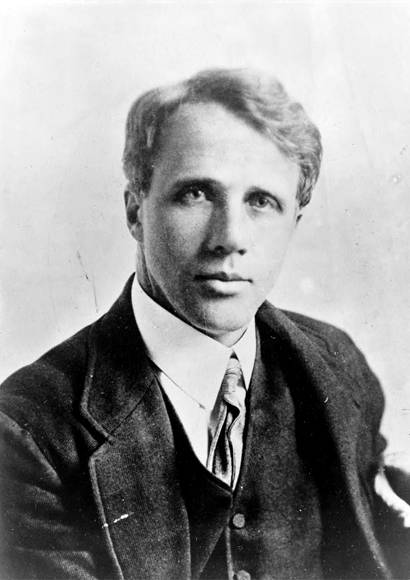
by Robert Frost
Oh, give us pleasure in the flowers to-day;
And give us not to think so far away
As the uncertain harvest; keep us here
All simply in the springing of the year.
Oh, give us pleasure in the orchard white,
Like nothing else by day, like ghosts by night;
And make us happy in the happy bees,
The swarm dilating round the perfect trees.
And make us happy in the darting bird
That suddenly above the bees is heard,
The meteor that thrusts in with needle bill,
And off a blossom in mid air stands still.
For this is love and nothing else is love,
The which it is reserved for God above
To sanctify to what far ends He will,
But which it only needs that we fulfill.
Ode on the Spring
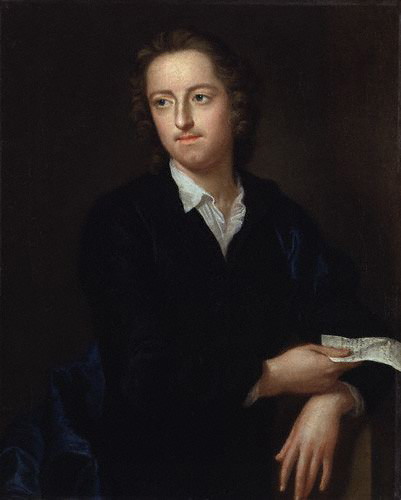
by Thomas Gray
Lo! where the rosy-bosom’d Hours,
Fair Venus’ train appear,
Disclose the long-expecting flowers,
And wake the purple year!
The Attic warbler pours her throat,
Responsive to the cuckoo’s note,
The untaught harmony of spring:
While whisp’ring pleasure as they fly,
Cool zephyrs thro’ the clear blue sky
Their gather’d fragrance fling.
Where’er the oak’s thick branches stretch
A broader, browner shade;
Where’er the rude and moss-grown beech
O’er-canopies the glade,
Beside some water’s rushy brink
With me the Muse shall sit, and think
(At ease reclin’d in rustic state)
How vain the ardour of the crowd.
How low, how little are the proud,
How indigent the great!
Still is the toiling hand of Care:
The panting herds repose:
Yet hark, how thro’ the peopled air
The busy murmur glows!
The insect youth are on the wing,
Eager to taste the honied spring,
And float amid the liquid noon:
Some lightly o’er the current skim,
Some show their gaily-gilded trim
Quick-glancing to the sun.
To Contemplation’s sober eye
Such is the race of man:
And they that creep, and they that fly,
Shall end where they began.
Alike the busy and the gay
But flutter thro’ life’s little day,
In fortune’s varying colours drest:
Brush’d by the hand of rough Mischance,
Or chill’d by age, their airy dance
They leave, in dust to rest.
Methinks I hear in accents low
The sportive kind reply:
Poor moralist! and what art thou?
A solitary fly!
Thy joys no glitt’ring female meets,
No hive hast thou of hoarded sweets,
No painted plumage to display:
On hasty wings thy youth is flown;
Thy sun is set, thy spring is gone—
We frolic, while ’tis May.
Loveliest of Trees, the Cherry Now
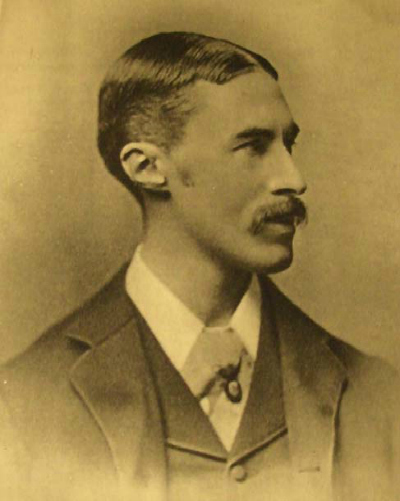
A.E. Housman
Loveliest of trees, the cherry now
Is hung with bloom along the bough,
And stands about the woodland ride
Wearing white for Eastertide.
Now, of my threescore years and ten,
Twenty will not come again,
And take from seventy springs a score,
It only leaves me fifty more.
And since to look at things in bloom
Fifty springs are little room,
About the woodlands I will go
To see the cherry hung with snow.
Ode to a Nightingale
by John Keats
My heart aches, and a drowsy numbness pains
My sense, as though of hemlock I had drunk,
Or emptied some dull opiate to the drains
One minute past, and Lethe-wards had sunk:
’Tis not through envy of thy happy lot,
But being too happy in thine happiness,—
That thou, light-winged Dryad of the trees
In some melodious plot
Of beechen green, and shadows numberless,
Singest of summer in full-throated ease.
O, for a draught of vintage! that hath been
Cool’d a long age in the deep-delved earth,
Tasting of Flora and the country green,
Dance, and Provençal song, and sunburnt mirth!
O for a beaker full of the warm South,
Full of the true, the blushful Hippocrene,
With beaded bubbles winking at the brim,
And purple-stained mouth;
That I might drink, and leave the world unseen,
And with thee fade away into the forest dim:
Fade far away, dissolve, and quite forget
What thou among the leaves hast never known,
The weariness, the fever, and the fret
Here, where men sit and hear each other groan;
Where palsy shakes a few, sad, last gray hairs,
Where youth grows pale, and spectre-thin, and dies;
Where but to think is to be full of sorrow
And leaden-eyed despairs,
Where Beauty cannot keep her lustrous eyes,
Or new Love pine at them beyond to-morrow.
Away! away! for I will fly to thee,
Not charioted by Bacchus and his pards,
But on the viewless wings of Poesy,
Though the dull brain perplexes and retards:
Already with thee! tender is the night,
And haply the Queen-Moon is on her throne,
Cluster’d around by all her starry Fays;
But here there is no light,
Save what from heaven is with the breezes blown
Through verdurous glooms and winding mossy ways.

I cannot see what flowers are at my feet,
Nor what soft incense hangs upon the boughs,
But, in embalmed darkness, guess each sweet
Wherewith the seasonable month endows
The grass, the thicket, and the fruit-tree wild;
White hawthorn, and the pastoral eglantine;
Fast fading violets cover’d up in leaves;
And mid-May’s eldest child,
The coming musk-rose, full of dewy wine,
The murmurous haunt of flies on summer eves.
Darkling I listen; and, for many a time
I have been half in love with easeful Death,
Call’d him soft names in many a mused rhyme,
To take into the air my quiet breath;
Now more than ever seems it rich to die,
To cease upon the midnight with no pain,
While thou art pouring forth thy soul abroad
In such an ecstasy!
Still wouldst thou sing, and I have ears in vain—
To thy high requiem become a sod.
Thou wast not born for death, immortal Bird!
No hungry generations tread thee down;
The voice I hear this passing night was heard
In ancient days by emperor and clown:
Perhaps the self-same song that found a path
Through the sad heart of Ruth, when, sick for home,
She stood in tears amid the alien corn;
The same that oft-times hath
Charm’d magic casements, opening on the foam
Of perilous seas, in faery lands forlorn.

Spring Quiet
by Christina Rossetti
Gone were but the Winter,
Come were but the Spring,
I would go to a covert
Where the birds sing.
Where in the whitethorn
Singeth a thrush,
And a robin sings
In the holly-bush.
Full of fresh scents
Are the budding boughs
Arching high over
A cool green house:
Full of sweet scents,
And whispering air
Which sayeth softly:
“We spread no snare;
“Here dwell in safety,
Here dwell alone,
With a clear stream
And a mossy stone.
“Here the sun shineth
Most shadily;
Here is heard an echo
Of the far sea,
Though far off it be.”
From You Have I Been Absent in the Spring (Sonnet 98)
William Shakespeare
From you have I been absent in the spring,
When proud-pied April, dressed in all his trim,
Hath put a spirit of youth in everything,
That heavy Saturn laughed and leaped with him,
Yet nor the lays of birds, nor the sweet smell
Of different flowers in odor and in hue,
Could make me any summer’s story tell,
Or from their proud lap pluck them where they grew.
Nor did I wonder at the lily’s white,
Nor praise the deep vermilion in the rose;
They were but sweet, but figures of delight,
Drawn after you, you pattern of all those.
Yet seemed it winter still, and, you away,
As with your shadow I with these did play.

These, I, Singing in Spring
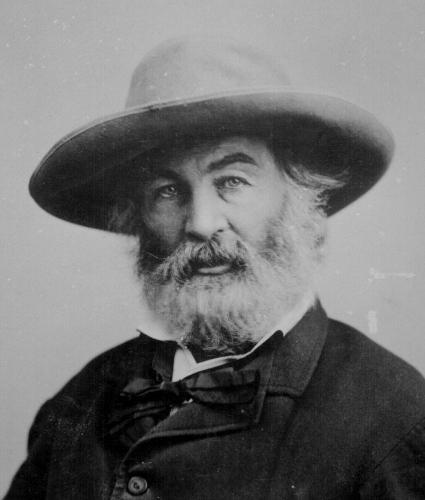
by Walt Whitman
These, I, singing in spring, collect for lovers,
(For who but I should understand lovers, and all their sorrow and joy?
And who but I should be the poet of comrades?)
Collecting, I traverse the garden, the world—but soon I pass the gates,
Now along the pond-side—now wading in a little, fearing not the wet,
Now by the post-and-rail fences, where the old stones thrown there, pick’d from the fields, have accumulated,
Wild-flowers and vines and weeds come up through the stones, and partly cover them—
Beyond these I pass,
Far, far in the forest, before I think where I go,
Solitary, smelling the earthy smell, stopping now and then in the silence,
Alone I had thought—yet soon a silent troop gathers around me,
Some walk by my side, and some behind, and some embrace my arms or neck,
They, the spirits of friends, dead or alive—thicker they come, a great crowd, and I in the middle,
Collecting, dispensing, singing in spring, there I wander with them,
Plucking something for tokens—tossing toward whoever is near me;
Here! lilac, with a branch of pine,
Here out of my pocket, some moss which I pull’d off a live-oak in Florida, as it hung trailing down,
Here, some pinks and laurel leaves, and a handful of sage,
And here what I now draw from the water, wading in the pond-side,
(O here I last saw him that tenderly loves me—and returns again, never to separate from me,
And this, O this shall henceforth be the token of comrades—this Calamus-root shall,
Interchange it, youths, with each other! Let none render it back!)
And twigs of maple, and a bunch of wild orange, and chestnut,
And stems of currants, and plum-blows, and the aromatic cedar:
These, I, compass’d around by a thick cloud of spirits,
Wandering, point to, or touch as I pass, or throw them loosely from me,
Indicating to each one what he shall have—giving something to each;
But what I drew from the water by the pond-side, that I reserve,
I will give of it—but only to them that love, as I myself am capable of loving.
Lines Written in Early Spring
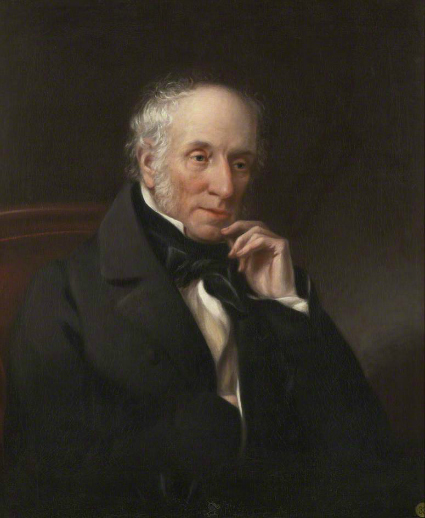
by William Wordsworth
I heard a thousand blended notes,
While in a grove I sate reclined,
In that sweet mood when pleasant thoughts
Bring sad thoughts to the mind.
To her fair works did Nature link
The human soul that through me ran;
And much it grieved my heart to think
What man has made of man.
Through primrose tufts, in that green bower,
The periwinkle trailed its wreaths;
And ’tis my faith that every flower
Enjoys the air it breathes.
The birds around me hopped and played,
Their thoughts I cannot measure:—
But the least motion which they made
It seemed a thrill of pleasure.
The budding twigs spread out their fan,
To catch the breezy air;
And I must think, do all I can,
That there was pleasure there.
If this belief from heaven be sent,
If such be Nature’s holy plan,
Have I not reason to lament
What man has made of man?
Listen to “Ode to a Nightingale” read by Ben Whishaw below:
Not gonna lie…John Keats is my favorite poet of all time! Ben Whishaw portrays Keats in the movie, Bright Star. If you’ve never seen it, I highly recommend it! The cinematography if absolutely gorgeous, and the poetry…Ahhh…
We’ve created copywork for your homeschool with ten of these spring poems:
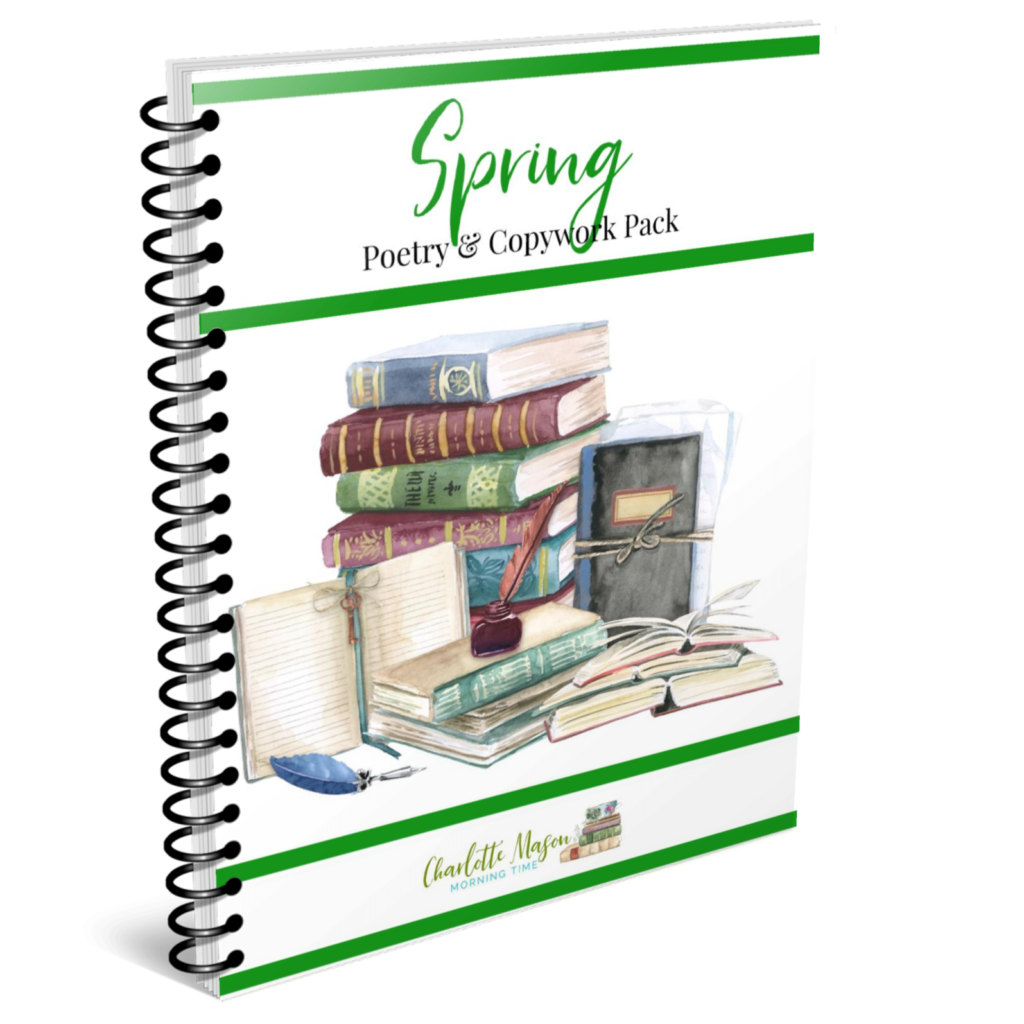
Poetry is an integral part of a Charlotte Mason education. It can be read during morning time, over lunch, in the afternoon with a pot of tea, or at any time of day.
We’ve curated this collection of spring poems to be used to reinforce memorization of beautiful lines as well as for practicing handwriting. After each poem, you will find Zaner-Bloser style handwriting sheets for all ages (primary, elementary, and cursive, as well as college-ruled for older students &/or moms) to be used for copywork.
Simply print out the sheets you need, then set a timer for 5 or 10 minutes and let your kids and teens work on practicing beautiful letters, words, verses, and poems.
If you desire to extend your poetry studies even further, we’ve also included in this packet:
- A short biography of each poet
- Poet Study notebooking page
- Poetry Study notebooking page
- Poetry Teatime Planner page
[Children’s readings] should include a good deal of poetry, to accustom him to the delicate rendering of shades of meaning, and especially to make him aware that words are beautiful in themselves, that they are a source of pleasure, and are worthy of our honour; and that a beautiful word deserves to be beautifully said, with a certain roundness of tone and precision of utterance.” ~ Charlotte Mason
Home Education, p. 227

Enjoy these spring poems? Check out our spring quotes here.
Pin Me!

Looking for some FUN spring-inspired art for your kids and teens? Check out these courses from the Masterpiece Society:
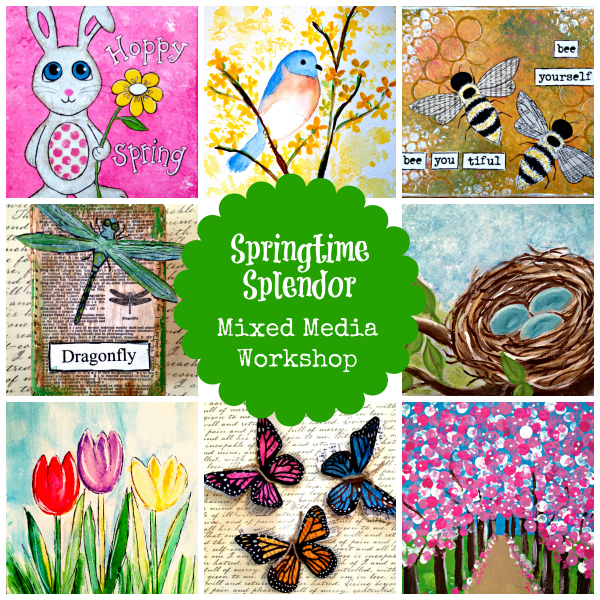
Springtime Splendor (ages 8-18)

Backyard Nature (ages 5-7)
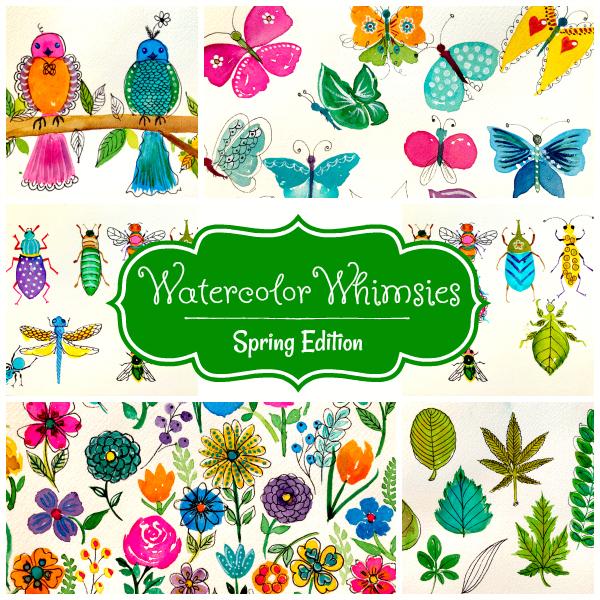
Watercolor Whimsies (ages 8-18)