
Welcome to the Victorian Era Morning Time Session!
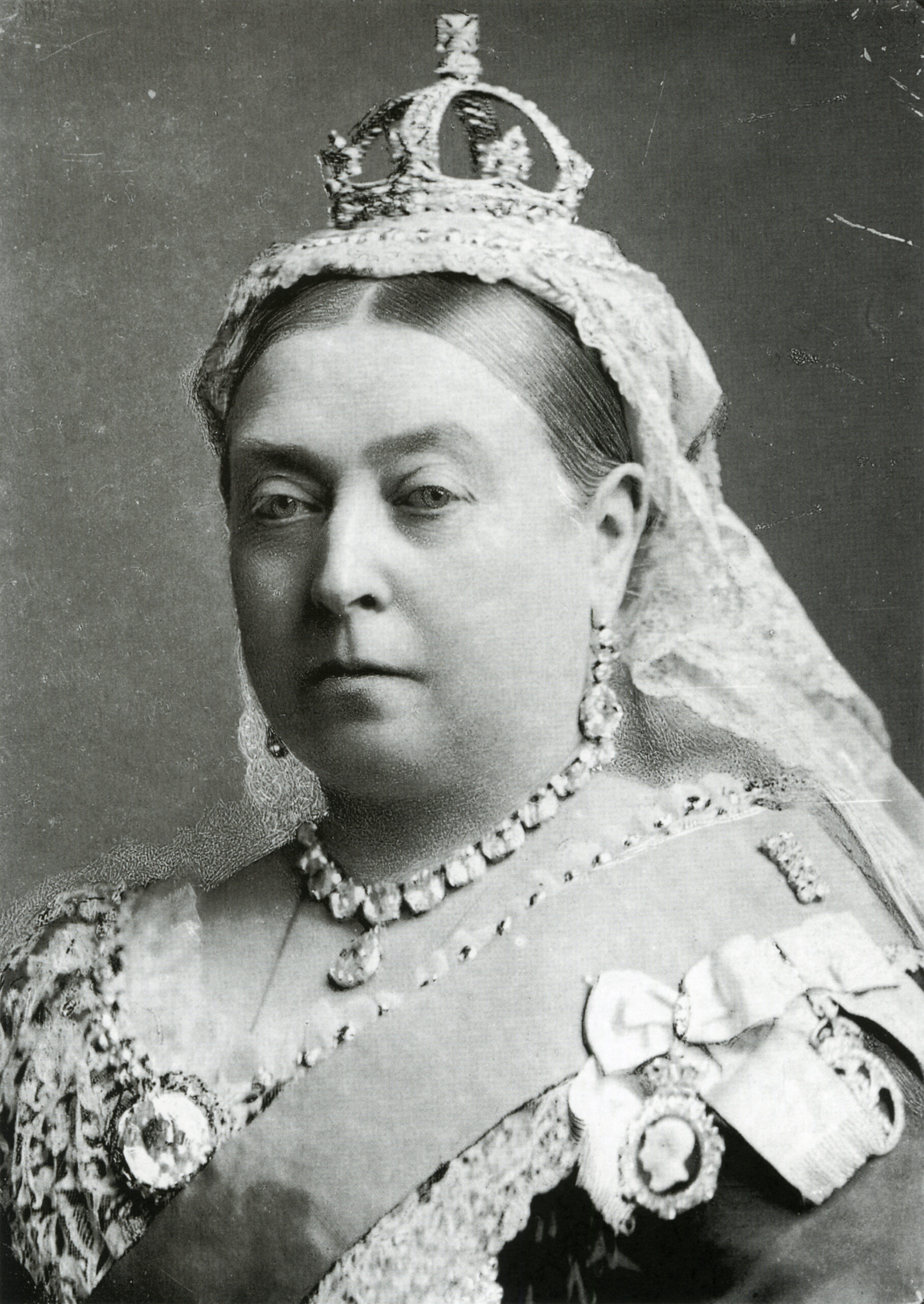
Welcome to the Victorian Era! We will be learning about many wonderful things that happened during the reign of Queen Victoria from 1837-1901.
There is a very thorough timeline here at History.com: https://www.history.com/topics/19th-century/victorian-era-timeline
Click on the button above to download the entire PDF,
or download only the sections you want below.
Schedule
Recommended Books
Prayer & Scripture Memorization
For Bible reading, we will make suggestions for your morning time reading. However, if you’d prefer a more in depth schedule, we recommend checking out various plans that will help you read the Bible through.
For a one-year plan, we recommend YouVersion’s One Year Bible: https://www.bible.com/readingplans/60. You can also listen to it being read aloud on the app.
Download a two-year reading plan from the Gospel Coalition here:
https://media.thegospelcoalition.org/static-blogs/tgc/files/2010/12/TGC-Two-Year-Bible-ReadingPlan1.pdf
If you prefer to go even slower, Ambleside Online offers three, four, and five-year Bible reading
plans: https://www.amblesideonline.org/L/Lbiblesch.html
This session, we will learn In Your Arms I Am Safe and focus on writing and memorizing 1 Peter 1:3.
Artist Study
This session’s featured artist is William Frith. We’ve included six art selections for your kids and teens to use for picture study. They are:
- Ramsgate Sands (Life at the Seaside)
- A Private View at the Royal Academy
- The Railway Station
- The Crossing Sweeper
- Charles Dickens in His Study
- The Two Central Figures in “Derby Day”
Composer Study
This session’s featured composer is Felix Mendelssohn. We’ve included six of his pieces (with links to each) to listen to. They are:
- A Midsummer Night’s Dream Overture
- Songs Without Words
- Octet in E-flat Major
- Symphony No. 3 – The Scottish
- The Hebrides Overture
- Violin Concerto in E Minor
Listen to each piece below:
A Midsummer Night’s Dream Overture
Songs Without Words
Octet in E-flat Major
Symphony No. 3 – The Scottish
The Hebrides Overture
Violin Concerto in E Minor
Hymn/Folk Song
Hymn
The hymn for this session is, “Fairest Lord Jesus.” It has been attributed to the German Jesuits, who first published it in their Munster Gesangbuch in 1677. The words date back at least 15 years earlier, having been found in a manuscript dating back to 1662.
“Fairest Lord Jesus” was a very popular hymn during the Victorian era, a time when the singing of hymns as part of worship was just becoming favored.
Listen to the music and sing along with it below:
Fairest Lord Jesus – performed by Phil Webb and the Grace Community Church Congregation
Folk Song
“Daisy Bell,” also known as “Bicycle Built for Two,” is a popular parlour song from the Victorian era, written by Harry Dacre in 1892. The song tells the story of a young man who expresses his love for his sweetheart, Daisy, and his desire to marry her and ride a bicycle built for two, symbolizing their journey together in life.
The chorus, which is the most recognizable part of the song, features the repeated plea from the young man to Daisy to give him her answer regarding his proposal of marriage: “Daisy, Daisy, give me your answer, do — I’m half crazy all for the love of you.”
“Daisy Bell” captures the spirit of romance and whimsy characteristic of the Victorian period, with its emphasis on courtship, love, and the emerging technologies of the time. Bicycles were a relatively new invention in the late 19th century, and the idea of a couple riding together on a tandem bicycle symbolized companionship and shared adventures.
The song became immensely popular in the late 19th and early 20th centuries, both in England and in the United States. It was often performed in music halls, vaudeville shows, and on gramophone records. Its catchy melody and sentimental lyrics made it a favorite for generations, and it has endured through various adaptations and covers.
One of the most notable renditions of “Daisy Bell” is by IBM’s 7094 computer, which famously performed a rendition of the song using speech synthesis in 1961, marking a milestone in early computer-generated music.
This song remains a charming and timeless piece of Victorian music, evoking a sense of nostalgia for a bygone era while still resonating with audiences today.
Listen and sing along with it below:
Daisy Bell
Listen to a somewhat creepy version of “Daisy Bell” sung by an IBM 7094 in the earliest demonstration of computer speech synthesis:
Want to enjoy more Victorian Parlour music? Here is a playlist to accompany your afternoon teas:
And here is a Spotify playlist your kids and teens might enjoy (at least they might enjoy laughing at the songs and trying to emulate the singing).
Poetry
This session’s featured poet is Elizabeth Barrett Browning. We’ve included six poetry selections for your kids and teens to read, listen to, memorize, and recite. They are:
- How Do I Love Thee? (Sonnet No. 43)
- If Thou Must Love Me (Sonnet No. 14)
- The Lady’s Yes
- Beloved, Thou Has Brought Me Many Flowers (Sonnet No. 44)
- Patience Taught by Nature
- Cheerfulness Taught by Reason
For copywork, we have included Zaner-Bloser style handwriting sheets for primary, elementary, and cursive, as well as college ruled for older students. The poem we chose is:
- Beloved, Thou Has Brought Me Many Flowers (Sonnet No. 44)
- The Lady’s Yes
- Cheerfulness Taught By Reason
- Patience Taught By Nature
Copywork
Tea Times
In this session we are giving you six recipes for our hospitality tea from the Victorian Era: Victorian Sponge Cake, English Crumpets, Rice Pudding, Lemon Tart, Charlotte Russe, and Trifle.
We will also have two Storytime teas, a Poetry teatime, a Theater teatime, a Fairy Tale teatime, and a Fable teatime:
Storytime Tea 1: Alice’s Adventures in Wonderland, Chapter VII: “The Mad Tea Party” by Lewis Carroll
Storytime Tea 2: The Adventure of the Norwood Builder by Sir Arthur Conan Doyle
Poetry Teatime: “Rime of the Ancient Mariner” by Samuel Taylor Coleridge
Theater Teatime: The Importance of Being Earnest play (we have included a link for you to watch the performance on YouTube)
Fairy Tale Teatime: The Yellow Fairy Book, “Thumbelina” by Andrew Lang
Fable Teatime: “The Milkmaid and Her Pail” by Aesop
Shakespeare
For our Shakespeare selection, we have chosen “Cymbeline.”
Read it from E. Nesbit’s Beautiful Stories From Shakespeare in the following pages. But we also recommend reading the actual play together as a family if you can.
Your older kids and teens may enjoy watching a movie adaptation (please pre-screen these first). And if you can take in a live performance, your family will never forget it!
We are including a link on our website to watch a pre-recorded stage performance of “Cymbeline.”
“Cymbeline” performed by Shakespeare & Company
Nature Study
Each Friday morning, you will go through two of our nature cards. They are labeled in the upper right corner with the corresponding week. These are short, factual cards with images to help your child become familiar with objects in the natural world.
As you progress through our sessions, you may find it handy to keep your past nature cards in a binder for easy reference when your children come across a familiar object. These seeds you are planting will grow into a wonderful garden of knowledge for your children in years to come.
As you explore nature outside your home, watch and listen for newly discovered delights.
The spectacular landscape of the Lake District has been a huge influence on some of England’s best-known writers. In particular, the Romantic poets of the late eighteenth and nineteenth century, such as William Wordsworth, Samuel Coleridge, Thomas de Quincey, and John Ruskin were hugely affected by their surroundings.
Also, many children’s authors have drawn inspiration from the landscape, such as Beatrix Potter, Arthur Ransome, and even the creator of Postman Pat.
Another hugely influential writer on the Lake District is Alfred Wainwright, author of many walking guides to the area.
Scroll down below for brief biographies of these famed writers that took inspiration from the beauty of the natural world around them:
Beatrix Potter
The famous children’s author Beatrix Potter lived from 1866 – 1943. She is best known for her beautifully illustrated books featuring Peter Rabbit, Jemima Puddle-Duck, and friends. She spent many childhood holidays in the Lake District, and these influenced her work.
With the profits from her publications, she bought Hill Top Farm and other hill farms and estates in the Lake District. Brockhole was the home of Beatrix’s cousin Edith, who married merchant William Gaddum. Beatrix used to write to her young second cousins Jim and Molly at Brockhole, which you can visit today. You can also see Peter Rabbit and her other famous animal characters at The World of Beatrix Potter in Windermere.
She became an expert Herdwick sheep breeder and the first female president-designate of the Herdwick Sheepbreeders’ Association. When she died in 1943, she left 14 farms, sheep, and 4000 acres of land to the National Trust.
Alfred Wainwright
Born in Blackburn, Lancashire, in 1907, Alfred Wainwright first visited the Lake District when he was 23 and fell in love with the area. He later moved to Kendal and devoted his life to mapping the area, writing seven guidebooks.
His Pictorial Guides to the Lakeland Fells are a unique mixture of beautiful pen-and-ink sketches, maps and musings. They feature 214 fell tops, which are known as ‘Wainwrights’ and many hikers like to try and bag them all!
Wainwright died in 1991, and there is a memorial to him in the church at Buttermere. His ashes were scattered above the village on his favorite mountain, Haystacks.
William Wordsworth
William Wordsworth is one of Britain’s most famous poets, who lived from 1770 – 1850. His ‘Daffodils’ poem, beginning with “I wander’d lonely as a cloud,” is the quintessential Lake District poem.
He was born in Cockermouth, just north of the National Park, and went to school in Hawkshead. After attending Cambridge University and then living in Dorset, Wordsworth moved back to the Lake District to Dove Cottage in Grasmere in 1799, and then Rydal Mount in 1813.
Wordsworth’s Guide through the District of the Lakes published in 1820 sparked off the first beginnings of mass tourism to the area.
John Ruskin
John Ruskin was a renowned Victorian poet, artist, and philosopher focused on society and conservation. He lived from 1819 – 1900.
Born in London, Ruskin was profoundly affected by his childhood experiences of the Lake District. His writings on architecture and art influenced Pre-Raphaelites artists such as Edward Burne-Jones and William Morris.
In the 1850s, he became more interested in politics. He passionately believed in conservation, the importance of planning, smokeless zones, free schools, and green belts, and campaigned for their importance. In 1871 Ruskin bought Brantwood near Coniston and retired there in 1884. He is buried in Coniston’s churchyard.
Arthur Ransome
Born in Leeds in 1884, Arthur Ransome learned to sail on Coniston and went to school in Windermere. He wrote a series of 12 Swallows and Amazons books, mostly set in the Lake District. The stories follow the adventures of the Walker and Blackett children camping on islands, mining for gold, fighting fell fires, and conquering mountains. Wild Cat Island is thought to be Peel Island in Coniston Water, and Kanchenjunga is thought to be the Old Man of Coniston.
He worked in London as a journalist and writer and reported on the Revolution in Russia. There he met his future wife Eugenia, who had been Trotsky’s secretary. He died in 1967.
The Ransomes lived in the Winster valley and Haverthwaite. Both Arthur and Eugenia are buried in Rusland churchyard.
Handicraft
For our handicraft lesson, we will create a “shellwork” trinket box (or frame). This is a simple activity that all ages can enjoy — from your younger children (with a bit of help to press their shells carefully onto their box lid), to teens who can design and embellish their own intricate creations.
Use seashells from your family’s vacation at the beach, or pick up an inexpensive pack of shells at your local craft store and have fun creating these practical pieces for yourself or giving them as gifts!
Art Lesson
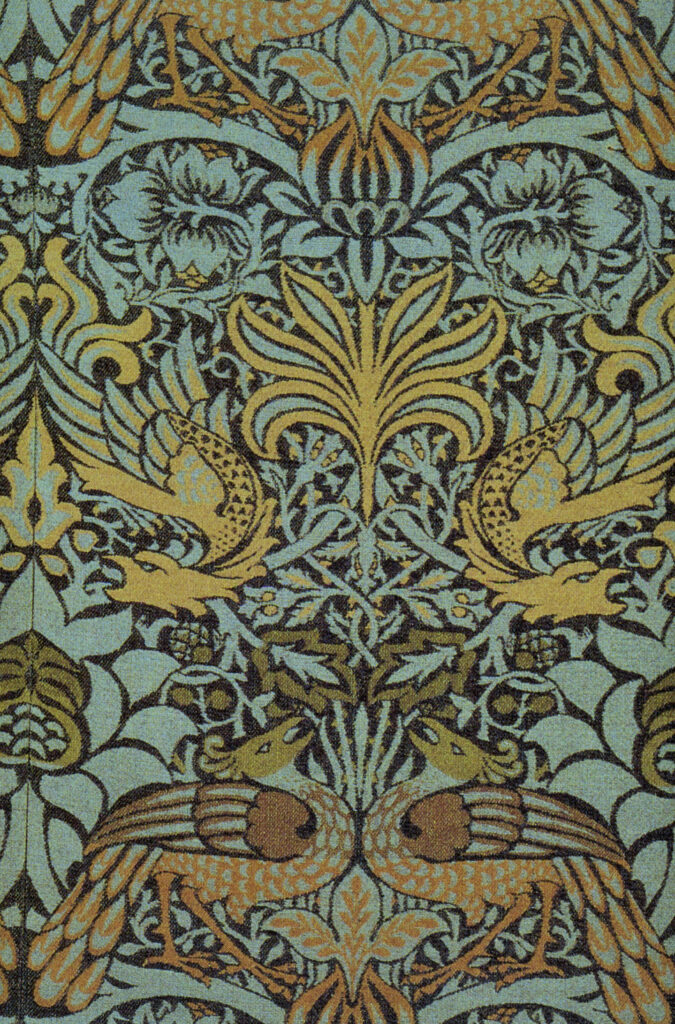
William Morris is best known as a Victorian Era designer and a leader of the Arts & Crafts Movement. With his company, Morris & Co., he advocated for “handmade production” that went against the grain of the era’s industrial progress. His company created furniture, wallpapers, carpets, embroiders, tapestries, tiles, book designs, and more.
Morris famously said, “Have nothing in your houses that you do not know to be useful or believe to be beautiful.”
In this lesson, we will talk about pattern design, motifs, and negative space using his wallpaper, Peacock & Dragon, as our inspiration piece.
Supplies needed:
- Watercolor paper
- Watercolors in your favorite colors (Alisha used yellow ochre, cadmium yellow, and viridian green)
- Paint brush (round)
- Black Sharpie
- Paper plate, paper towel, jar of water
Dragon Motif Only Template | Peacock & Dragon Motif Template | Full Template
History & Geography
For this session’s history, you will read about the reign of Queen Victoria from H.E. Marshall’s Our Island Story. You can download it by clicking the button below:
We have also included several articles to read through, as well as three videos for your family’s further study of the Victorian Era! Additionally, we have included a map of the British Empire and an optional exercise to enhance your family’s Geography study!
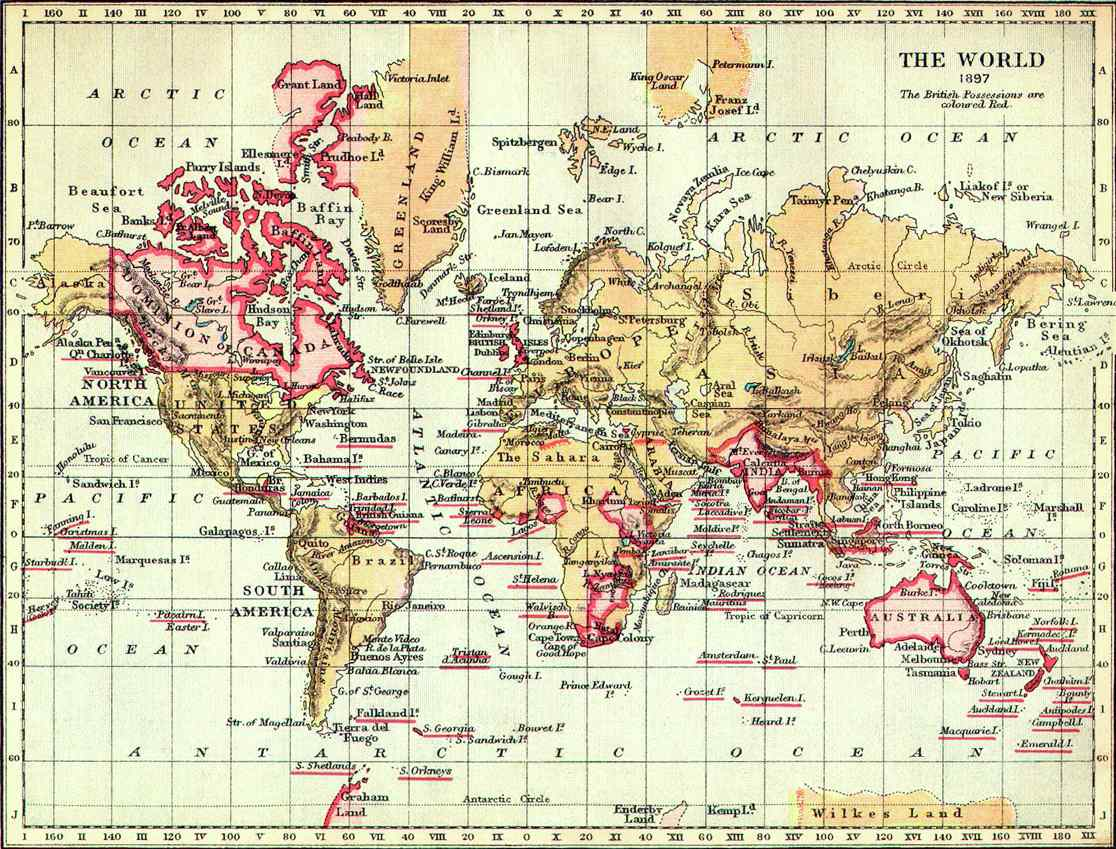
Here is a map of the British Empire during Queen Victoria’s reign:
History-
Week 1: Read about the Irish Potato Famine: https://www.history.com/topics/immigration/irish-potato-famine
Week 2: Learn more about the Crimean War here:https://www.history.com/topics/european-history/crimean-war
Read about Florence Nightingale: https://www.history.com/topics/womens-history/florence-nightingale-1
Week 3: Read more on the Siege of Delhi:
https://www.britannica.com/event/Siege-of-Delhi
Week 4: Learn more the Commonwealth of Australia:
Week 5: Learn more about the Boer War:
https://www.britannica.com/event/South-African-War
Week 6: There is no history reading for this week.
Geography-
Optional: Have students map out the British Empire during the Victorian Era (refer to the map above) on a globe and record in their Geography notebook:
Queen Victoria’s reign, from 1837 to 1901, marked a period of significant growth for the British Empire. This era witnessed many social changes, unprecedented economic progress, and a profound expansion of the British Empire. The empire expanded its territories across the globe, establishing colonies and protectorates in regions like Africa, Asia, and the Pacific.
Major events during this time included the colonization of Hong Kong in 1842, the absorption of Indian territories through the East India Company, and the late 19th-century ‘Scramble for Africa,’ where Britain acquired vast territories.
The British Empire, by the end of Queen Victoria’s reign, was the most extensive empire in history, symbolizing the height of the British colonial power. Some of the key areas included:
- In Europe: Great Britain (England, Scotland and Wales), Ireland, Malta, Gibraltar, and Cyprus.
- In the Americas: Canada, British Honduras (now Belize), British Guiana (now Guyana), and several Caribbean islands such as Jamaica, Trinidad and Tobago, The Bahamas, and Barbados.
- In Asia: India, Burma, Malaya, Hong Kong, and Ceylon (now Sri Lanka).
- In Africa: Egypt, the Sudan, South Africa, Sierra Leone, Nigeria, and parts of East Africa, such as Kenya and Uganda.
- In the Pacific: Australia, New Zealand, Fiji, Papua New Guinea, and several other island groups.
Each of these territories contributed to the vast wealth and influence of the British Empire during the Victorian era.
Queen Victoria & The Victorian Era Documentary – by The People’s Profiles
Victorian Teenagers Reminisce: Yesterday’s Witness | Voice of the People | BBC Archive
Fashion Throughout History – by English History
Solfa
Charlotte Mason incorporated solfa lessons twice a week for about 10 minutes each. These lessons are intended to be repeated and you can stay on any lesson for as long as you like. Here is the YouTube channel Lara and her boys enjoy and recommends for practicing solfa, Children of the Open Air:
Brush Drawing
Brush drawing builds motor and observation skills. We have included a link to videos by Bestowing the Brush below which are great for all ages to learn together:
