Welcome to the Dynastic Age Morning Time Session!
Click on the button above to download the entire PDF,
or download only the sections you want below.
Schedule
Recommended Books
Prayer & Scripture Memorization
For Bible reading, we will make suggestions for your morning time reading. However, if you’d prefer a more in-depth schedule, we recommend checking out various plans that will help you read the Bible through.
For a one-year plan, we recommend YouVersion’s One Year Bible: https://www.bible.com/readingplans/60. You can also listen to it being read aloud on the app.
Download a two-year reading plan from the Gospel Coalition here:
https://media.thegospelcoalition.org/static-blogs/tgc/files/2010/12/TGC-Two-Year-Bible-ReadingPlan1.pdf
If you prefer to go even slower, Ambleside Online offers three, four, and five-year Bible reading
plans: https://www.amblesideonline.org/L/Lbiblesch.html
This session, we will learn The Lord’s Prayer and focus on writing and memorizing Proverbs 4:7 and James 3:17. We have also included additional copywork comparing and contrasting scriptures with quotes from the famous ancient Chinese philosopher, Confucius.
Artist Study
This session features six artists from ancient China. We’ve included six art selections for your kids and teens to use for picture study. They are:
- Admonitions of the Instructress to the Court Ladies, by Gu Kaizhi
- The Teaching Confucius, by Wu Daozi
- Luxuriant Forest Among Distant Peaks, attributed to Li Cheng
- Travelers Among Mountains and Streams, by Fan Kuan
- Early Spring, by Guo Xi
- Along the River During the Qingming Festival, by Zhang Zeduan
Composer Study
This session features music from several ancient Chinese dynasties. We have included six playlists for music study. They are:
- Music from the Zhou Dynasty
- Music from the Han Dynasty
- Music from the Tang Dynasty
- Music from the Song Dynasty
- Music from the Qing Dynasty
- Traditional & Neo-Traditional Music
Listen to each playlist below:
Music from the Zhou Dynasty (featuring a guqin)
Music from the Han Dynasty (featuring a pipa):
Music from the Tang Dynasty (featuring flutes & percussion)
Music from the Song Dynasty (featuring bianzhong)
Music from the Qing Dynasty (featuring strings)
Traditional & Neo-Traditional
Hymn/Folk Song
Hymn
“Great Is Thy Faithfulness” is a hymn that celebrates the unchanging nature of God and His constant care for His people. Written in 1923 by Thomas O. Chisholm, the hymn opens with a declaration of God’s constancy, proclaiming that there is “no shadow of turning” with Him. In a world where circumstances continually shift, God alone remains dependable and true. Over time, “Great Is Thy Faithfulness” has become one of the most beloved hymns across Christian traditions. It reminds us that God’s faithfulness is not reserved for extraordinary events, but is revealed again and again in the ordinary mercies of each new day.
Listen to the music and sing along with it below:
Great is Thy Faithfulness – Maranatha! Music
Folk Song
“Mo Li Hua,” or “Jasmine Flower,” is one of the most famous traditional folk songs of China, cherished for its gentle melody and poetic simplicity. Its origins are often traced to the Qing Dynasty (1644–1912), though it likely developed from even earlier regional folk traditions, especially in the Jiangsu province.
The lyrics are short and repetitive, describing the beauty and fragrance of the jasmine flower. The singer praises the flower as the most lovely of all and expresses a desire to pick it. However, this desire is held back by hesitation—fear of damaging the flower or of being scolded by others. This small moment of indecision gives the song its emotional depth. Though it is brief, the song captures a quiet moment of admiration, reminding listeners that true beauty is something to be honored, not hurriedly taken.
Listen and sing along with it below:
Mo Li Hua – Chinese Version
Mo Li Hua – English Version
Mo Li Hua – Instrumental
Poetry
Our featured poet for this session is Li Bai. We’ve included twelve poetry selections for your kids and teens to read, listen to, memorize, and recite. They are:
- Quiet Night Thoughts
- Watching the Waterfall at Mount Lu
- Spring Morning
- A Song of an Autumn Midnight
- Zazen on Ching-t’ing Mountain
- Ancient Air
- Question and Answer on the Mountain
- Hearing a Flute on a Spring Night in Luoyang
- Marble Steps Complaint
- Staying the Night at a Mountain Temple
- Viewing Heaven’s Gate Mountains
- At the Yellow Crane Tower to Bid Meng Haoran Goodbye
For copywork, we have included Zaner-Bloser style handwriting sheets for primary, elementary, and cursive, as well as college ruled for older students. We have chosen four poems, listed below:
- Zazen on Ching-t’ing Mountain
- Ancient Air
- Question and Answer on the Mountain
- Staying the Night at a Mountain Temple
Copywork
Tea Times
In this session, we are giving you six historical recipes for our tea time: Rice Balls, Sesame Flatbread (Shaobing), Tofu Pudding (Douhua), Scallion Flatbread, Rice Cakes (Bai tang gao), and Lotus Seed Buns.
We will also have six storytime teas:
Fairy Tale Tea 1: Ch. XI “The Reward of a Benevolent Life,” from Chinese Folk Lore Tales, by Rev. J. MacGowan
Fairy Tale Tea 2: “Bamboo and the Turtle” from The Chinese Wonder Book, by Norman Hinsdale Pitman
Fairy Tale Tea 3: Ch. XLIII ”The Dragon After His Winter Sleep” from The Chinese Fairy Book, by Dr. Richard Wilhelm
Fable Tea 4: Chapter XIII “The Fox and the Raven” from The Chinese Fairy Book, by Dr. Richard Wilhelm
Fairy Tale Tea 5: “How the Moon Became Beautiful” from Chinese Fables and Folk Stories, by Mary Hayes Davis and Chow-Leung
Fairy Tale Tea 6: The Clever Wife, from the Han Dynasty (202 BC – AD 220)
As a bonus, you and your family can try your hands at some tanagram puzzles during your tea time! Tanagram puzzles were invented in China and have become a popular way to sharpen the mind and explore shapes all over the world! Try some here.
Plutarch
For our Plutarch selection, we have chosen “The Man with Many Faces,” a study of Alcibiades, a brilliant yet changeable man whose shifting loyalties reveal the dangers of ambition without steady character. This chapter is taken from The Children’s Plutarch: Stories of the Greeks, and is included it on the following pages. The book may also be purchased on Amazon.
If your children are 6th grade or older, we recommend spending a full 12-week term studying Alcibiades with the edited (for length and content) study guide from Ambleside here.
You can also purchase the guide by Anne White on Amazon. (This is in place of The Children’s Plutarch, not in addition to.)
Nature Study
Each Friday morning, you will go through two of our nature cards. They are labeled in the upper right corner with the corresponding week. These are short, factual cards with images to help your child become familiar with objects in the natural world.
As you progress through our sessions, you may find it handy to keep your past nature cards in a binder for easy reference when your children come across a familiar object. These seeds you are planting will grow into a wonderful garden of knowledge for your children in years to come.
As you explore nature outside your home, watch and listen for newly discovered delights.
Handicraft
For our handicraft lesson, we will create a Chinese paper lantern. We are using xuan (rice) paper for a traditional style, but feel free to substitute copy paper—or experiment with various types of papers (tissue paper, parchment paper, etc.). If you don’t have chopsticks, you can use craft sticks or small wooden dowels.
The plum blossom is the national flower of China, so we are including that as a template, or your children might want to choose a different design. We highly recommend using markers instead of paint, and if you use rice paper, please put blotter paper underneath since markers could bleed through.
Art Lesson
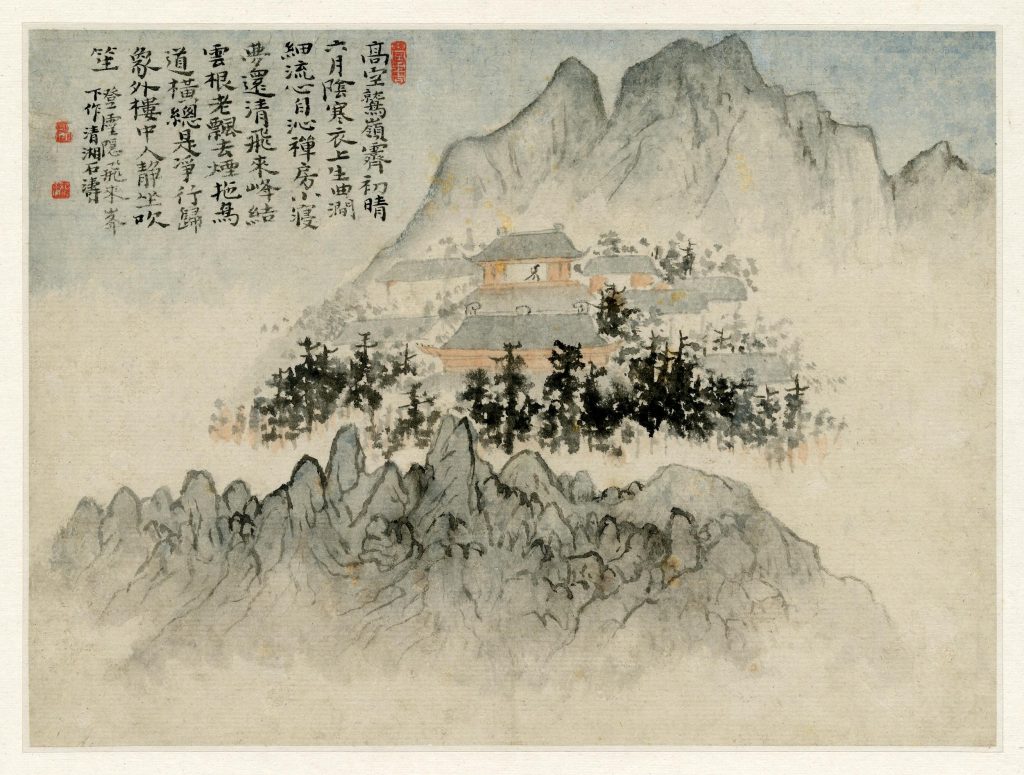
In this lesson, we will recreate an ancient Chinese landscape painting in sumi ink and watercolors.
Supplies needed:
- Watercolor paper
- Sumi ink
- Watercolors
- Two round brushes, large and small
- Two jar lids (for separating ink)
- Two jars of water (for cleaning watercolor and inks separately)
- Paper towel
History & Geography
For history, we are providing links to three living books in the public domain, which you might like to incorporate into this morning time session.
Your family may also enjoy reading the portions of Augustus Caesar’s World, by Genevieve Foster, that talk about China.
For geography, you can read chapters 28-30 of Richard Halliburton’s Book of Marvels: The Orient.
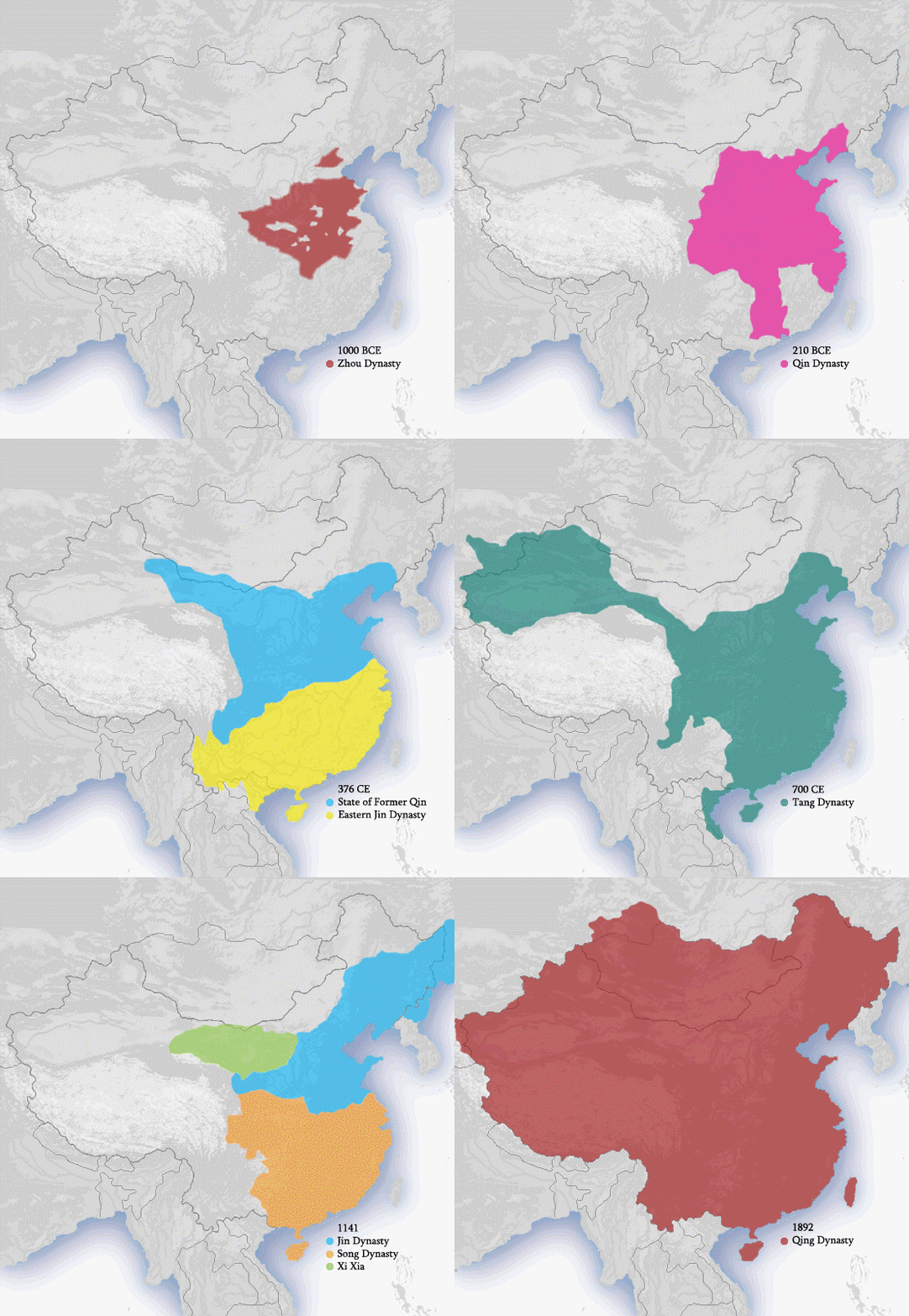
We have also provided a 1962 map of China from the Library of Congress, as well as a line map. We highly recommend using your own atlas and globe for further study.
Click here to view a .gif of China’s Dynastic Territories.
Solfa
Charlotte Mason incorporated solfa lessons twice a week for about 10 minutes each. These lessons are intended to be repeated and you can stay on any lesson for as long as you like. Here is the YouTube channel Lara and her boys enjoy and recommends for practicing solfa, Children of the Open Air:
Brush Drawing
Brush drawing builds motor and observation skills. We have included a link to videos by Bestowing the Brush below which are great for all ages to learn together: