
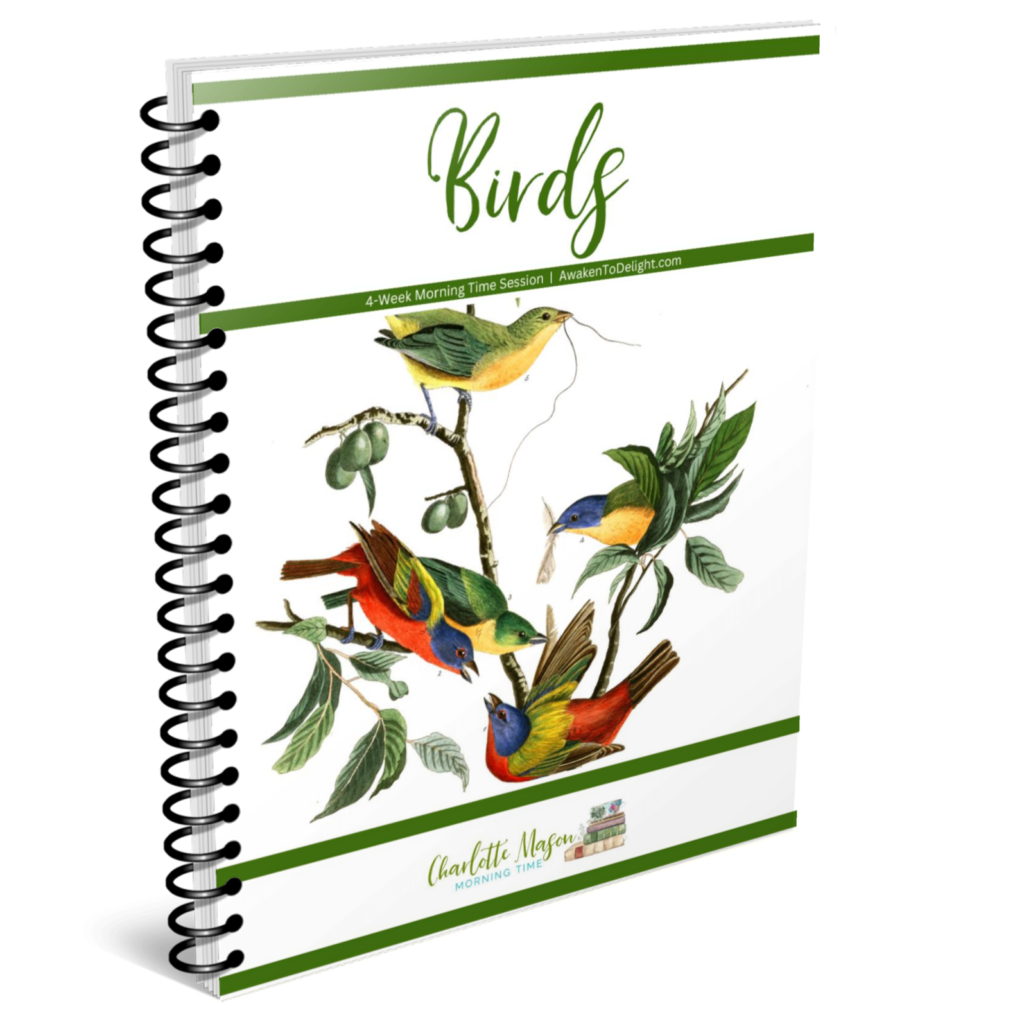
Welcome to the Birds Morning Time Session!
Click on the button above to download the entire PDF,
or download only the sections you want below.
*Join the Great Backyard Bird Count here.*
Check out the following websites which are excellent resources as you study birds:
(All images below courtesy of Hal Moran)
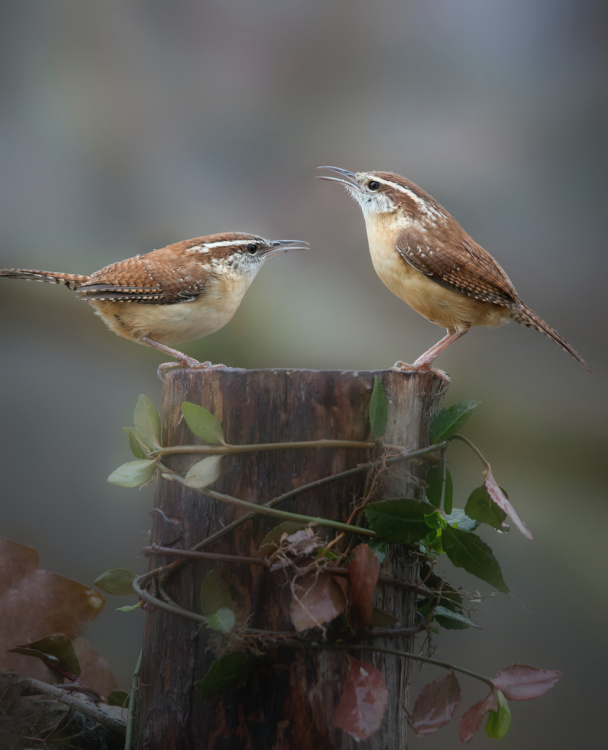
All About Birds /Cornell Labs
This is my all time favorite bird website! So much amazing information inside this one site. (Be sure to download their Merlin app to help you identify the various birds in your backyard — or wherever you go. I’ve used it for years!)
John James Audubon’s Birds of America
John James Audubon’s Birds of America is a portal into the natural world. Printed between 1827 and 1838, it contains 435 life-size watercolors of North American birds (Havell edition), all reproduced from hand-engraved plates, and is considered to be the archetype of wildlife illustration. Nearly 200 years later, the Audubon prints are coming to life once again, thanks to our vibrant digital library. Click through the images below to read Audubon’s writings on each species and access a free high-resolution download.
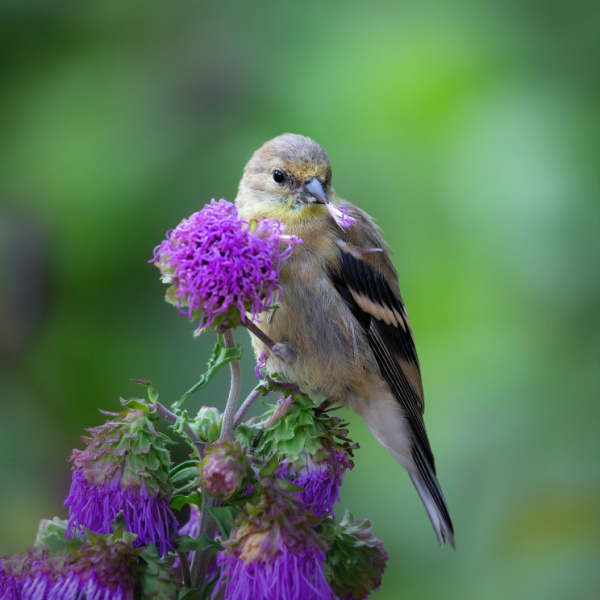
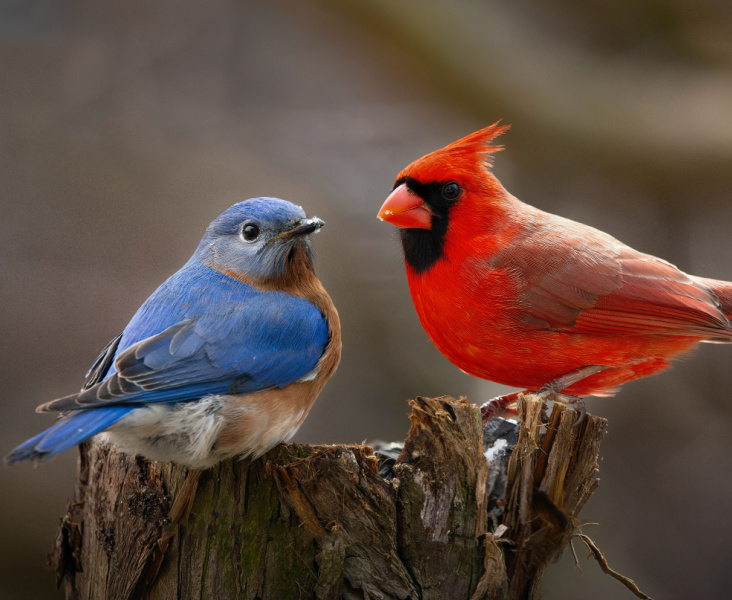
National Audubon Society
The National Audubon Society protects birds and the places they need, today and tomorrow, throughout the Americas using science, advocacy, education, and on-the-ground conservation.
Schedule
Recommended Books
Prayer & Scripture Memorization
For Bible reading, we will make suggestions for your morning time reading. However, if you’d prefer a more in depth schedule, we recommend checking out various plans that will help you read the Bible through.
For a one-year plan, we recommend YouVersion’s One Year Bible: https://www.bible.com/readingplans/60. You can also listen to it being read aloud on the app.
Download a two-year reading plan from the Gospel Coalition here:
https://media.thegospelcoalition.org/static-blogs/tgc/files/2010/12/TGC-Two-Year-Bible-ReadingPlan1.pdf
If you prefer to go even slower, Ambleside Online offers three, four, and five-year Bible reading
plans: https://www.amblesideonline.org/L/Lbiblesch.html
This session, we will learn the Casting Your Cares Prayer (1 Peter 5:7) and focus on writing and memorizing Matthew 6:25-33.
Casting Your Cares Prayer:
“I cast all of my cares, anxieties, worries, and concerns upon You, Father God, because you care for me with deepest affection, and You watch over me tenderly and carefully. There is nothing too
difficult for You!”
Matthew 6:25-33
25 “Therefore I say to you, do not worry about your life, what you will eat or what you will drink; nor about your body, what you will put on. Is not life more than food and the body more than clothing? 26 Look at the birds of the air, for they neither sow nor reap nor gather into barns; yet your heavenly Father feeds them. Are you not of more value than they? 27 Which of you by worrying can add one cubit to his stature? 28 “So why do you worry about clothing? Consider the lilies of the field, how they grow: they neither toil nor spin; 29 and yet I say to you that even Solomon in all his glory was not arrayed like one of these. 30 Now if God so clothes the grass of the field, which today is, and tomorrow is thrown into the oven, will He not much more clothe you, O you of little faith? 31 “Therefore do not worry, saying, ‘What shall we eat?’ or ‘What shall we drink?’ or ‘What shall we wear?’ 32 For after all these things the Gentiles seek. For your heavenly Father knows that you need all these things. 33 But seek first the kingdom of God and His righteousness, and all these things shall be added to you.
Artist Study
This session’s featured artist is John James Audubon. We’ve included four art selections for your kids and teens to use for picture study. They are:
- American Goldfinch
- American Robin
- Bluejay
- Ruby-Throated Hummingbird
Composer Study
Our featured composer is Olivier Messiaen. We’ve included four of his pieces (with links to each) to listen to. They are:
- Oiseaux Exotiques
- Le Réveil des Oiseaux
- Catalogue d’oiseaux
- Le Merle Noir
Listen to each piece below:
Oiseaux Exotiques
Le Réveil des Oiseaux
Catalogue d’oiseaux
Le Merle Noir
Hymn/Folk Song
Hymn
The hymn, “His Eye Is On the Sparrow,” was written in 1905 by Civilla D. Martin. The lyrics are based on:
- Psalm 32:8, “I will instruct thee and teach thee in the way which thou shalt go: I will guide thee with mine eye.”
- Matthew 6:28, “Look at the birds of the air; they neither sow nor reap nor gather into barns, and yet your heavenly Father feeds them. Are you not of more value than they?”
- Matthew 10:29–31, “Are not two sparrows sold for a farthing? and one of them shall not fall on the ground without your Father. But the very hairs of your head are all numbered. Fear ye not therefore, ye are of more value than many sparrows.”
Mrs. Martin was inspired to write the hymn after meeting the Doolittles of Elmira, New York. She wrote:
“Early in the spring of 1905, my husband and I were sojourning in Elmira, New York. We developed a deep friendship for a couple by the name of Mr. and Mrs. Doolittle — true saints of God. Mrs. Doolittle had been bedridden for nigh 20 years. Her husband was an incurable cripple who had to propel himself to and from his business in a wheelchair.”
Civilla continued, “Despite their afflictions, they lived happy Christian lives, bringing inspiration and comfort to all who knew them. One day, while we were visiting with the Doolittles, my husband commented on their bright hopefulness and asked them for the secret of it. Mrs. Doolittle’s reply was simple: ‘His eye is on the sparrow, and I know he watches me.’ The beauty of this simple expression of boundless faith gripped the hearts and fired the imagination of Dr. Martin and me. The song ‘His Eye Is on the Sparrow’ was the outcome of that experience.”
She wrote it as a poem, then the next day she mailed the poem to Charles Gabriel, who composed the music so it could be sung as a hymn.
Whether we are facing trials or enjoying life’s blessings, we can take comfort in knowing that our Father will take good care of us!
Listen to the music and sing along with it below:
Folk Song
There are quite a few versions of the folk song, “The Old Carrion Crow.” In fact, its origins are somewhat disputed. Some claim that it evolved from an older Irish folk ballad called “Buttermilk Mary,” only changing the name later on. Others believe that the song was originally English in origin, and was later picked up by Scottish people who migrated south to England.
Though similar, each version has its own melody and lyrics, as well as its own chorus of nonsensical syllables. Written in the Dorian mode, which corresponds to the piano keyboard’s white notes from D to D (similar to Scarborough Faire), the melody usually has a moderate, upbeat tempo. The song tells the amusing story of a tailor who tries to shoot a crow but ends up hitting (and killing) a sow.
Regardless of its origins, it is a fun folk song to sing – or try to sing – if you can keep up with those absurd lyrics!
Listen and sing along with it below:
Poetry
In this lesson we’ve included four poetry selections for your kids and teens to read, listen to, memorize, and recite. They are:
- Ode to a Nightingale
- To a Skylark
- The Eagle
- A Bird, Came Down the Walk
For copywork, we have included Zaner-Bloser style handwriting sheets for primary, elementary, and cursive, as well as college ruled for older students. The poems we have chosen are:
- Ode to a Nightingale
- To a Skylark
Copywork
Tea Times
In this session we are giving you four recipes for our hospitality tea: Hummingbird Cake, Granola Nests, Birdseed Cookies, and Egg Salad Tea Sandwiches.
We will also have Fairy Tale teatimes, a Fable teatime, and a Poetry teatime:
Fairy Tale Teatime #1: The Bluebird, by Marie-Catherine Le Jumel de Barneville, Baroness d’Aulnoy
Fairy Tale Teatime #2: The Golden Bird, by the Brothers Grimm
Fable Teatime: The Lark and Her Young, by Aesop
Poetry Teatime: The Raven, by Edgar Allan Poe
Shakespeare & Recommended Readings
For this session, we will not feature a Shakespeare play. However, we will link to the book, The Ornithology of Shakespeare, by James Edmund Harting. This is a fun and interesting way to continue our study of birds.
Shakespeare used birds in his plays and poems as metaphors, imagery, and symbols more than any other kind of animal or object, drawing parallels to characters or describing the human condition.
For our recommended readings, we are linking to The Burgess Bird Book for Children. as well as the LibriVox recordings of the chapters.
If you have older students who are enthusiastic “birders,” perhaps they’d enjoy perusing John James Audubon’s journals. Below are links to volumes 1 through 3:
Nature Study
Each Friday morning, you will go through two of our nature cards. They are labeled in the upper right corner with the corresponding week. These are short, factual cards with images to help your child become familiar with objects in the natural world.
As you progress through our sessions, you may find it handy to keep your past nature cards in a binder for easy reference when your children come across a familiar object. These seeds you are planting will grow into a wonderful garden of knowledge for your children in years to come.
As you explore nature outside your home, watch and listen for newly discovered delights. Most of all, remember…
“Point to some lovely flower or gracious tree, not only as a beautiful work, but as a beautiful thought of God.”
~ Charlotte Mason
Handicraft
For our handicraft lesson, we will be creating birdseed cakes. This is a simple activity that all ages can enjoy – from your younger children (with a bit of help), to teens.
Each family member can create their own uniquely-shaped cakes, then sit back and enjoy watching the backyard birds (or squirrels) devour their treats.
Art Lesson

In this lesson, we are going to paint my favorite bird, and the one John James Audubon called his “greatest favourite of the feathered tribes of our woods,” the wood thrush.
Supplies needed:
- 8×10 canvas panel (or watercolor paper)
- Acrylic paints (I used dark brown, chocolate brown, white, and yellow, but use the colors of the bird of your choice)
- Paint brushes (large flat or sponge brush for background, plus 1 or 2 small round brushes)
- Optional: Black Sharpie
- Paper plate, paper towel, jar of water
History & Geography
For Geography, we recommend reading Seabird, by Holling C. Holling. (Please see the schedule for recommended chapters each day.) We have included the entire book for the month, but feel free to go slower and savor the book over a few months if desired.


Add in additional activities as you read. Lara recommends several ideas…
- Draw and label a map of Greenland
- Learn about icebergs
- Discuss trading and eskimo culture
- Draw a walrus
- Draw and label parts of a whale
- Create Seabird from paper, clay or natural materials
- Trace Seabird’s route on the world map
- Research harpooners
- Learn about sperm whales
- Research how different parts of the whale were used
- Eat a meal from the Orient and learn to use chopsticks
- Create a notebook page about the different types of islands
Solfa
Charlotte Mason incorporated solfa lessons twice a week for about 10 minutes each. These lessons are intended to be repeated and you can stay on any lesson for as long as you like. Here is the YouTube channel Lara and her boys enjoy and recommends for practicing solfa, Children of the Open Air:
Brush Drawing
Brush drawing builds motor and observation skills. We have included a link to videos by Bestowing the Brush below which are great for all ages to learn together:
