
Welcome to the Insects Morning Time Session!
Click on the button above to download the entire PDF,
or download only the sections you want below.
Schedule
Recommended Books
Prayer & Scripture Memorization
For Bible reading, we will make suggestions for your morning time reading. However, if you’d prefer a more in depth schedule, we recommend checking out various plans that will help you read the Bible through.
For a one-year plan, we recommend YouVersion’s One Year Bible: https://www.bible.com/readingplans/60. You can also listen to it being read aloud on the app.
Download a two-year reading plan from the Gospel Coalition here:
https://media.thegospelcoalition.org/static-blogs/tgc/files/2010/12/TGC-Two-Year-Bible-ReadingPlan1.pdf
If you prefer to go even slower, Ambleside Online offers three, four, and five-year Bible reading
plans: https://www.amblesideonline.org/L/Lbiblesch.html
This session, we will learn Maker of Heaven and Earth and focus on writing and memorizing Proverbs 6:6-11, Proverbs 30:24-28 and Matthew 6:19-21.
Artist Study
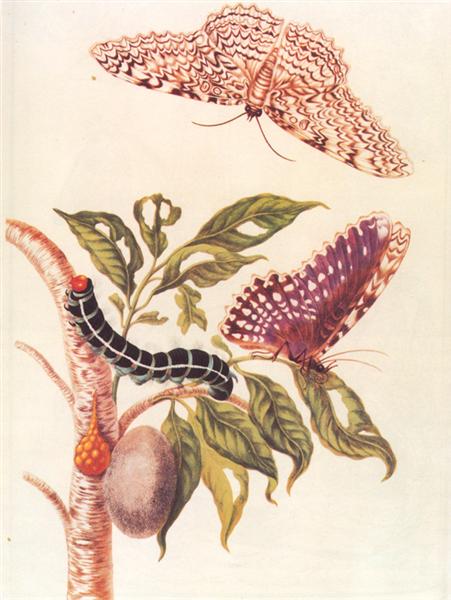
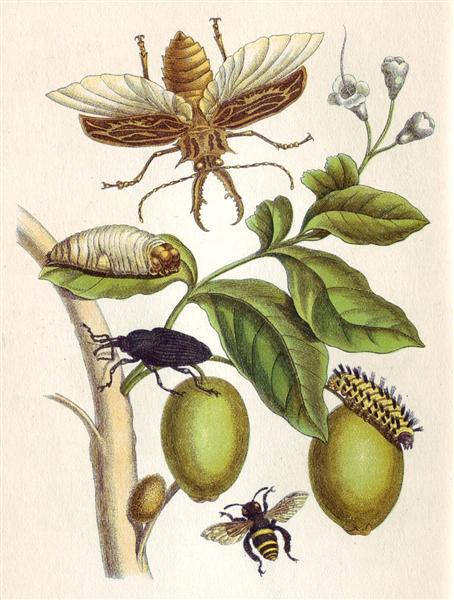
This session’s featured artist is Maria Sibylla Merian. We’ve included four art selections for your kids and teens to use for picture study. They are:
- Metamorphosis Insectorum Surinamensium
- Spiders Ants and Hummingbird on a Branch of a Guava
- From Metamorphosis Insectorum Surinamensium Plate xlviii
- Metamorphosis of a Butterfly
Composer Study
We have no featured composer for this session, but have picked out an assortment of insect-themed classic music (with links to each) to listen to. They are:
- Flight of the Bumblebee by Rimsky-Korsakov
- The Wasps by Ralph Vaughan Williams
- Etude no. 2 in F minor, Op. 25 no. 2, “The Bees” by Frederic Chopin
- No. 142, “From the Diary of a Fly” by Béla Bart
Listen to each piece below:
The Flight of the Bumblebee
Overture- The Wasps
No. 142, From the Diary of a Fly
Chopin: 12 Études, Op. 25, No. 2 in F Minor “The Bees”
Hymn/Folk Song
Hymn
“All Things Bright and Beautiful” is a beloved Christian hymn that celebrates the beauty of God’s creation. It was written in the 1800s by Cecil Frances Alexander, a woman from Ireland. She wrote this hymn to help children understand that God made everything in the world—big and small—and that all of it is wonderful. Today, “All Things Bright and Beautiful” is still sung around the world and reminds us to thank God for nature as we enjoy the beauty of His creation.
Listen to the music and sing along with it below:
All Things Bright and Beautiful (Rutter) | Atlanta Master Chorale
Folk Song
“The Ants Go Marching” is a well-known folk song often sung by children at school, during playtime, or at camp. The melody of “The Ants Go Marching” comes from a much older song called “When Johnny Comes Marching Home.” This song was written during the American Civil War by Patrick S. Gilmore,
which expressed hope for soldiers to return home safely. In the 1990s, this same melody was used to create the children’s version featuring ants by Robert D. Singleton. “The Ants Go Marching” is a great example of how older songs can be transformed and passed down in new ways, helping generations of children learn and enjoy music at the same time.
Listen and sing along with it below:
The Ants Go Marching (Lyrical)
BONUS: The Ants Go Marching Orchestral Sing-Along
Poetry
We’ve included four quirky insect-themed poems in this session for your kids and teens to read, listen to, memorize, and recite. They are:
- Forgiven by A.A. Milne
- On the Grasshopper and the Cricket by John Keats
- Fireflies by Edgar Fawcett
- The Butterfly’s Ball and the Grasshopper’s Feast by William Roscoe
For copywork, we have included Zaner-Bloser style handwriting sheets for primary, elementary, and cursive, as well as college-ruled for older students. The poems we have chosen are:
- Forgiven by A.A. Milne
- On the Grasshopper and the Cricket by John Keats
- Fireflies by Edgar Fawcett
- The Butterfly’s Ball and the Grasshopper’s Feast by William Roscoe
Copywork
Tea Times
In this session, we are giving you four insect-themed recipes for our hospitality tea: Insect Fossil Peanut Butter Cookies, Lady Bug Caprese, Peanut Butter Bumblebees, & Layered Edible Soil.
We will also have two Fairy Tale teas, a Storytime tea, and a fable teatime:
Fairy Tale Tea: Japanese Fairy World, “The Fire-Fly’s Lovers” by William Elliot Griffis
Fairy Tale Tea: Fairy Tales from Brazil, “How the Brazilian Beetles Got Their Gorgeous Coat” by Elsie Spicer Eells
Storytime Tea: Through the Looking Glass, Chapter III “Looking Glass Insects” by Lewis Carroll
Fable Teatime: “The Bee and the Butterflies” by Aesop
Shakespeare
For our Shakespeare selection, we have chosen a fascinating study on the various insects mentioned in Shakespeare’s works, Robert Patterson’s Letters on the Natural History of the Insects Mentioned in Shakespeare’s Plays.
Nature Study
Each Friday morning, you will go through two of our nature cards. They are labeled in the upper right corner with the corresponding week. These are short, factual cards with images to help your child become familiar with objects in the natural world.
As you progress through our sessions, you may find it handy to keep your past nature cards in a binder for easy reference when your children come across a familiar object. These seeds you are planting will grow into a wonderful garden of knowledge for your children in years to come.
As you explore nature outside your home, watch and listen for newly discovered delights. As a bonus, watch the videos below to discover more about the life cycles of insects!
The Life Cycle Of An Ant
The Life Cycle of a Butterfly
The Life Cycle Of A Honey Bee
The Life Cycle of a Dragonfly
The Life Cycle of a Darkling Beetle (Mealworm)
Handicraft
In this session, we are creating adorable insect origami of a mantis, spider, scorpion, bee, dragonfly, cicada, snail, butterfly, and ladybug! Images and step-by-step instructions have been provided for an easy process. Use different colors to match the insects, or choose decorative paper for interesting designs! This handicraft is the perfect hands-on activity for students young and old!
Art Lesson
Maria Sibylla Merian-Inspired Lifecycle Art Lesson
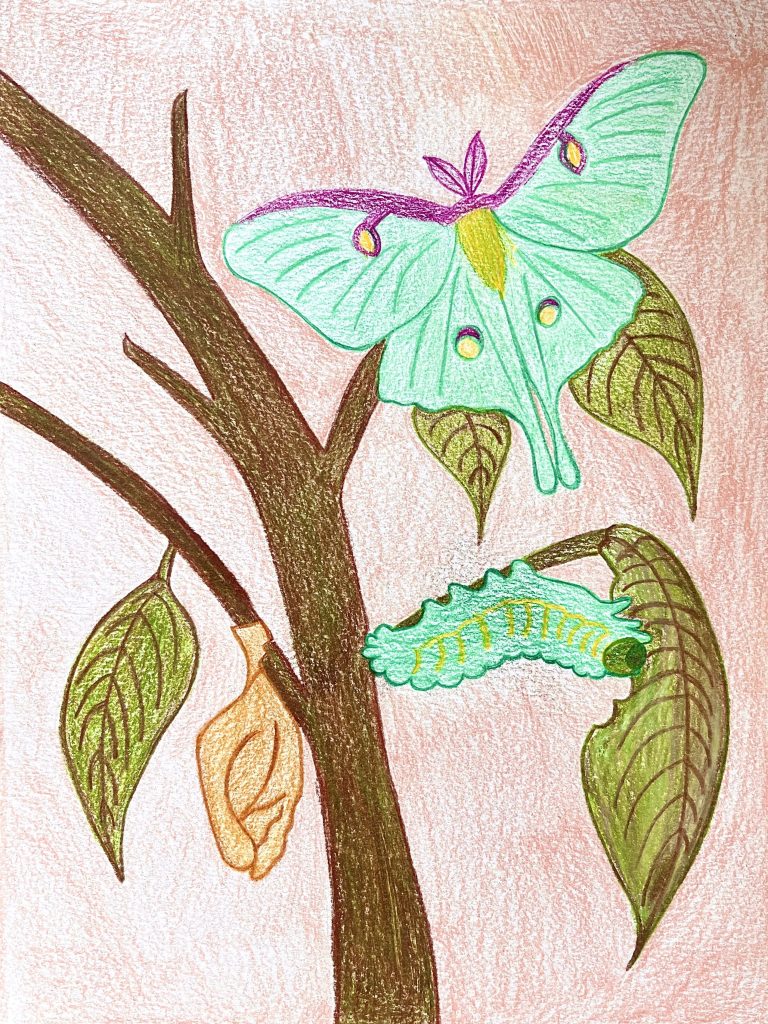
In this lesson, we take inspiration from our featured artist: Maria Sibylla Merian, and create an art piece similar to her artworks on the lifecycle of insects, such as Metamorphosis Insectorum Surinamensium and Metamorphosis of a Butterfly. For this product, choose your favorite insect and study its lifecycle, from egg, to larva, to pupa, and finally to adult. Olivia’s favorite insect is the luna moth, so she created artwork of the caterpillar, chrysalis, and adult moth. These are examples of the art she uses as reference:
Supplies needed:
- Watercolor Paper
- Colored pencils (or other preferred art mediums, such as watercolors, markers, or acrylic paints)
- Pencil
- Blender
- Template
Solfa
Charlotte Mason incorporated solfa lessons twice a week for about 10 minutes each. These lessons are intended to be repeated and you can stay on any lesson for as long as you like. Here is the YouTube channel Lara and her boys enjoy and recommends for practicing solfa, Children of the Open Air:
Brush Drawing
Brush drawing builds motor and observation skills. We have included a link to videos by Bestowing the Brush below which are great for all ages to learn together:
